
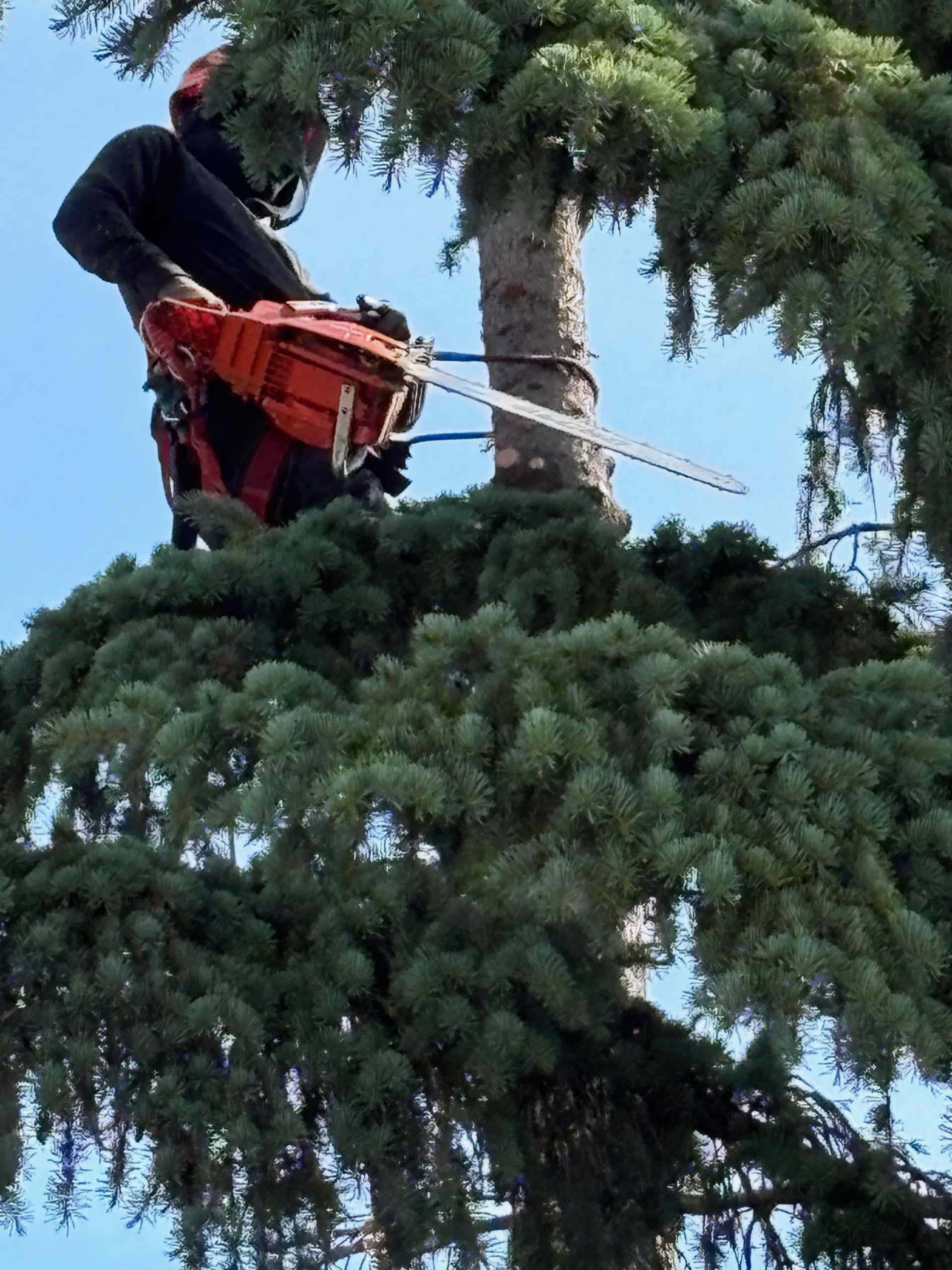
A big wet snowfall makes Edmonton look great for about a day. Then you look out the back window and the spruce is bent over, the cedars by the front step are splayed open, and there’s a branch on the birch that wasn’t sitting that low yesterday.
Most of the time the trees are fine. Snow is heavy, but trees here are built for it and a lot of what looks bad springs back on its own. Some of it isn’t fine though, and the trick is knowing which is which.
The short answer: brush loose snow off small trees and shrubs gently, sweeping up, not down. Leave ice alone. Don’t stand under a big tree that’s loaded up. And if a limb is cracked, hanging, or sitting over your house, car or a power line, that’s when you call someone.
Which Trees Take The Worst Of It
Spruce. Big Colorado and white spruce hold a lot of snow on those flat branches. Usually they shed it. Where we see trouble is spruce with two tops (co-dominant leaders) — the snow sits in the crotch and the weight pries the two halves apart.
Cedars and junipers. Multi-stem evergreens open up like a book under heavy snow. Once the stems split away from the centre they don’t always come back, and you’re left with a hole in the middle of the hedge.
Columnar aspens. The Swedish columnar aspens all over the newer neighbourhoods are tall, skinny and short-lived. Snow and wind snap the tops, especially on trees that are already in decline.
Siberian elm, Manitoba maple, poplar and willow. Weak wood. These are the ones that drop big limbs, and they tend to drop them on whatever is underneath.
Birch. Young birch bend right over to the ground under wet snow. Most of them stand back up in spring. If one is still bent by June, it probably won’t.
Anything that was already dead or dying. Dead wood gets brittle and snow is often what finally brings it down. If you’ve had a tree you were “keeping an eye on,” winter is when it decides for you. (Not sure if yours is dead? We wrote about how to tell.)
What You Can Do Yourself
Brush, don’t shake. For small trees and shrubs you can reach from the ground, use a broom and push the snow up and off the branches. Sweeping down puts more weight on a branch that’s already bent and that’s how they snap. A gentle shake on a small shrub is fine. Don’t yank on anything.
Leave ice alone. Ice is different from snow. Frozen branches are stiff and brittle and knocking ice off with a broom or a rake breaks more than it saves. Let it melt. Don’t pour hot water on it either.
Don’t try to stand a bent tree back up. Bent isn’t broken. Forcing a frozen branch upright is how you break it. Give it until spring.
Don’t pile shovelled snow on shrubs. The snow off the driveway is heavier and dirtier than what falls, and it crushes hedges and small trees by March.
Stay out from under big trees. If a mature tree is loaded with snow or ice, don’t walk under it, don’t park under it, and don’t try to clear it with a pole. A limb coming out of a 50-foot spruce doesn’t care what’s below it.
Tie up the cedars before the next one. If you have upright cedars or junipers that split open every winter, you can wrap them loosely with soft strapping (old nylons work) so they shed snow. Take it off in spring so it doesn’t cut into the bark.
When It’s Time To Call Us
Call when:
- A limb is cracked or split but still hanging up in the tree
- A branch is resting on the roof, the garage, the fence or a car
- The tree is leaning more than it was before the snow, or the ground at the base has heaved or cracked
- A two-top spruce or a big elm has split down the middle
- A tree or limb is down across the driveway and you need it gone
Hanging limbs are the dangerous ones. They can sit there for days and then let go when the snow melts or the wind picks up. Don’t pull on them. Send us photos and we’ll tell you what it needs.
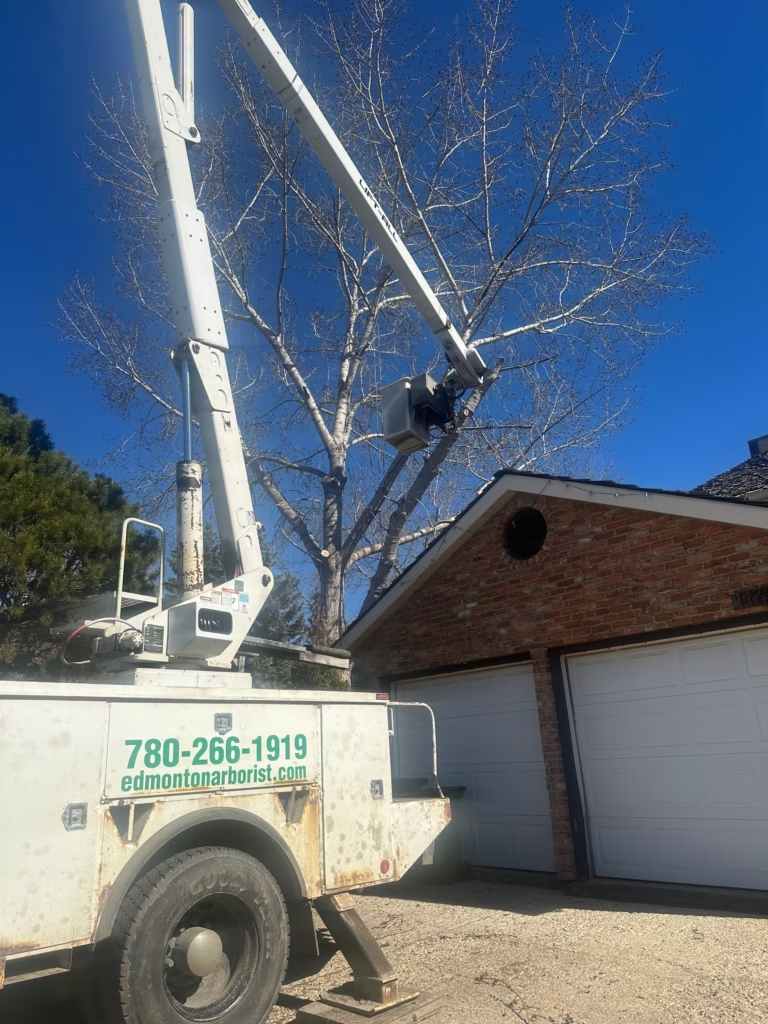
Our crews work all winter, and for real hazards we try to be there the same day or the next. More on how that works on our emergency tree service page.
If the tree isn’t urgent but you know it has to come down, winter is actually a good time to do it. Frozen ground, no flower beds to wreck, and it’s easier to get on the schedule. Here’s why winter tree removal works.
If It’s Near A Power Line
Don’t touch it, and don’t try to cut it. Keep everyone at least 10 metres back from anything touching a line and call EPCOR’s 24-hour line at 780-412-4500, or 911. EPCOR deals with the primary lines. Once the line is safe, we can take care of the tree.
The line that runs from the pole to your house is the homeowner’s responsibility to keep clear. If branches are rubbing on it, call us before the next snow puts them right on it.
After The Snow Melts
Take a walk around in spring and look up. Things to watch for:
- Broken stubs and torn bark where a branch came off
- Cracks running down from where two big stems meet
- Branches that are still bent way out of shape
- Splits in cedar hedges that didn’t close back up
Broken branches should be cut back clean to a good branch or the trunk. A torn stub is an open door for rot and disease. That’s a normal tree trimming job, and late winter, while the trees are dormant, is a good time for it. For a spruce or elm that’s split but still worth keeping, sometimes a cable holds the two halves together — see tree cabling. Sometimes it’s past that, and the tree needs to come out (tree removal).
Elm is its own case. Elm pruning is only allowed from October 1 to March 31, and elm wood has to be disposed of properly — no keeping it for firewood. If a snow-broken elm limb needs cleaning up, it has to be done in that window. More on that in our elm pruning season post.
What It Costs
Cleaning up a broken limb or two is usually a small job. A full storm cleanup on a big tree, or a removal, costs more — the price depends on the size of the tree, what it’s hanging over, and how fast it needs to happen. Real prices from real jobs are on our rates page. Prices are before GST, and seniors get 10% off.
Snap a few photos of the tree and the damage and send them in. We’ll quote it from the photos, usually the same day.
Fully insured and WCB covered. Serving Edmonton and area since 2018.
Get a free quote or call (780) 266-1919.


